

What is Macular Degeneration
Macular degeneration is an eye disease that affects central vision. This means, that people with macular degeneration can’t see things directly in front of them. This common age-related eye condition mostly occurs in people over the age of 50. Macular degeneration affects your macula, the central part of your retina. Retina is in the back of your eye and controls central vision. People with degeneration aren’t completely blind.

Levels of severity
How common is macular degeneration?
Almost 20 million U.S. adults have macular degeneration. Globally, the prediction is that 288 million people will have the condition by 2040.
In the U.S., macular degeneration is a leading cause of vision loss in people who are 60 and older.
Who might get macular degeneration?
Degeneration is more likely to occur as one gets older. However, people can develop macular degeneration at younger ages because of several factors.
In addition to age, risk factors for macular degeneration include:
- Having a family history of macular degeneration.
- Being overweight.
- Smoking.
- Having high blood pressure (hypertension).
Types of Macular Degeneration
There are two types of macular degeneration:
- Dry(atrophic) macular degeneration; Nearly 90% of people with macular degeneration have the dry form. It develops when tiny yellow protein deposits called drusen form under macula. The built-up deposits dry and thin your macula. Vision loss with the dry form of macular degeneration tends to occur gradually. Most people don’t completely lose central vision. In some cases, the dry form can change to the wet form.
- Wet(exudative) macular degeneration; Wet (exudative) macular degeneration occurs when abnormal blood vessels develop under your retina and macula. The blood vessels leak blood and fluid. “Exudative” is a term that refers to how the fluids ooze. Because of fluid buildup, a bulge forms in your macula. one may see dark spots in your center of vision. About 10% of people with macular degeneration have the wet form. This type is more severe. It can quickly lead to total loss of central vision.
Macular Degeneration aren’t evident until the late stage. However, eye care provider can see signs when doing an exam.
- Early: macula changes, but vision isn’t affected.
- Intermediate: Vision may get blurry or wavy.
- Late (advanced): Central vision fails completely. Wet macular degeneration is already at an advanced stage.
Symptoms and causes
What causes macular degeneration?
Macular degeneration can be an inherited eye disease. But it also develops in people with no family history of the disease. Macular degeneration when the macula at the back of your eye starts to waste away for unknown reasons. Getting older is a factor in age-related macular degeneration. Non-age-related macular degeneration may be associated with:
- Diabetes.
- Head injuries.
- Infections.
- A diet lacking in required nutrients.
Macular Degeneration have a damaged macula, brain can’t understand or read the images that eyes see. Many people with macular degeneration don’t have symptoms until the disease progresses. One may experience:
- Being less able to see in low light.
- Blurred vision.
- Problems or changes in the way One see colors.
- Low vision.
- Straight lines that one see as curving or wavy. When looking at lines that you know should be straight but they appear wavy or curved,
- Blank spots or dark spots in field of vision.
Diagnosis and Tests
How is macular degeneration diagnosed?
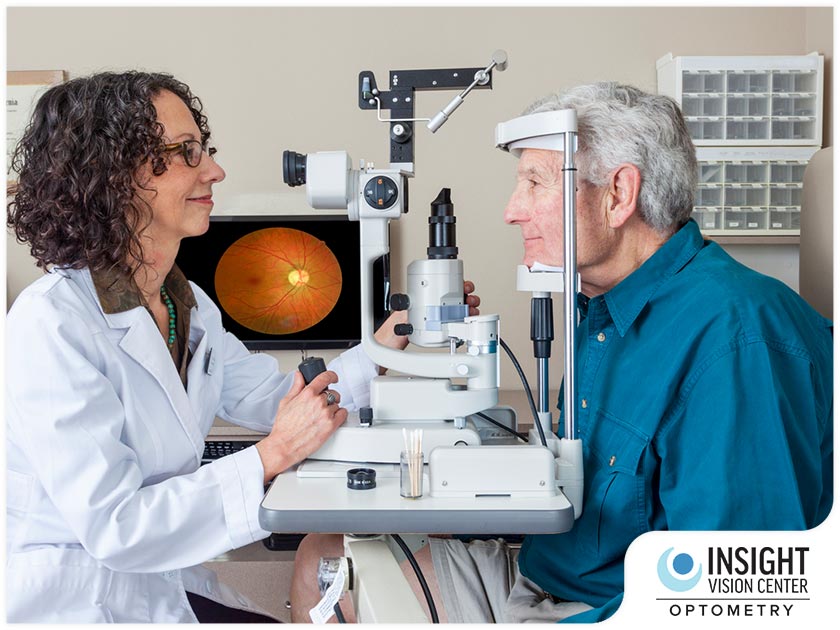
Macular degeneration rarely causes symptoms in its early stages, so annual eye examinations are very important. They’ll help your provider find the disease early and start treatments when they’re most effective. During an eye exam, your eye care provider checks for changes to your retina and macula. Your provider may order one or more of these tests:
Macular Degeneration indicates that one have macular degeneration or show that the disease is getting worse. Individual can use this at home to monitor your symptoms and look for any progression.
- Dilated eye exam: Eye drops dilate, or widen, your pupils. Your provider will give you the drops and dilate your eyes and then will use a special lens to look inside your eyes.
- Fluorescein angiography: Your healthcare provider injects a yellow dye called fluorescein into a vein in your arm. A special camera tracks the dye as it travels through blood vessels in your eye. The photos can reveal any leakage under your macula.
- Optical coherence tomography (0CT): This imaging machine takes detailed images of the back of your eye, including your retina and macula. Optical coherence tomography isn’t invasive or painful. You simply look into a lens while the machine takes pictures.
- Optical coherence tomography angiography (0CTA): This diagnostic tool uses laser light reflection (instead of fluorescein dye) and the 0CT scanning device. It takes just a few moments and produces 3D images of blood flow through eye.
Management and Treatment
How is macular degeneration managed or treated?
There’s no cure for macular degeneration. Starting treatments early can slow Nutritional supplements to treat dry age-related macular degeneration (AMD). The Age-Related Eye Disease Studies (AREDS and AREDS2) found that a combination of vitamins and minerals might slow the progression of dry AMD.
AREDS Supplements include these ingredients:
- Vitamin C.
- Vitamin E.
- Lutein.
- Zinc.
- Copper.
- Zeaxanthin.
The first version of the supplements contained the antioxidant beta- but it raises the risk of lung cancer in people who smoke and people who used to smoke. In the newer version, zeaxanthin and lutein are the antioxidants. Medications to treat wet age-related macular degeneration (AMD). There are drugs that treat but don’t cure wet AMD. They include anti-vascular endothelial growth factor (anti-VEGF) injections. They block the production of VEGF, which is a protein that produces new blood vessels. Your provider, generally a retina specialist, will numb your eye before giving you a shot into the vitreous (intravitreal injections). Anti-VEGF shots can sometimes improve Macular Degeneration.
- Ranibizumab (Lucentis®).
- Bevacizumab (Avastin®).
- Faricimab-svoa (VABYSMO®).
- Brolucİzumab (Beovu®)
Photodynamic therapy to Macular Degeneration
During photodynamic therapy (PDT), eye care specialist uses a combination of an injectable light-sensitive drug and a laser to destroy extra blood vessels in your eye. Your provider may combine PDT with anti-VEGF shots.
Laser photocoagulation to treat wet age-related macular degeneration
During this treatment, your provider will use a laser to seal and destroy the leaking blood vessels. This was actually the first treatment for wet AMD. Providers don’t use laser photocoagulation and PDT as often as they once did due to the development of anti-VEGF injections.
What are the side effects or risks of macular degeneration treatments?
Treatments for wet AMD carry some risk of complications, including; Eye infection.
What are the complications of macular degeneration?
Losing central vision can make it challenging to do certain tasks. Depending on the extent of vision impairment, one may not be able to:
- Read well.
- Recognize faces.
- Drive.
- Cook.
- Do home repairs.
- Severe AMD may lead to you being legally blind.
- Changes in your lifestyle can lead to depression and anxiety.
- Some people with AMD experience Charles Bonnet syndrome, a condition that causes visual hallucinations.
How can l prevent Macular Degeneration?
One can take these steps to lower the risk of macular degeneration:
- Quit smoking.
- Stay physically active.
- Maintain healthy blood pressure and cholesterol levels.
 Safe Future Ministry for the Blind and Visually Impaired