

People with glaucoma have optic nerve damage from fluid buildup in their eye. Left untreated, this eye pressure can permanently affect vision. Glaucoma is the second leading cause of blindness in the world.
Treatment includes; eye drops, laser treatments and surgeries – can slow down vision loss and save your sight.
Glaucoma is a general term used to describe a group of eye disorders that damage your optic nerve. It’s the most common form of optic nerve damage leading to vision loss.
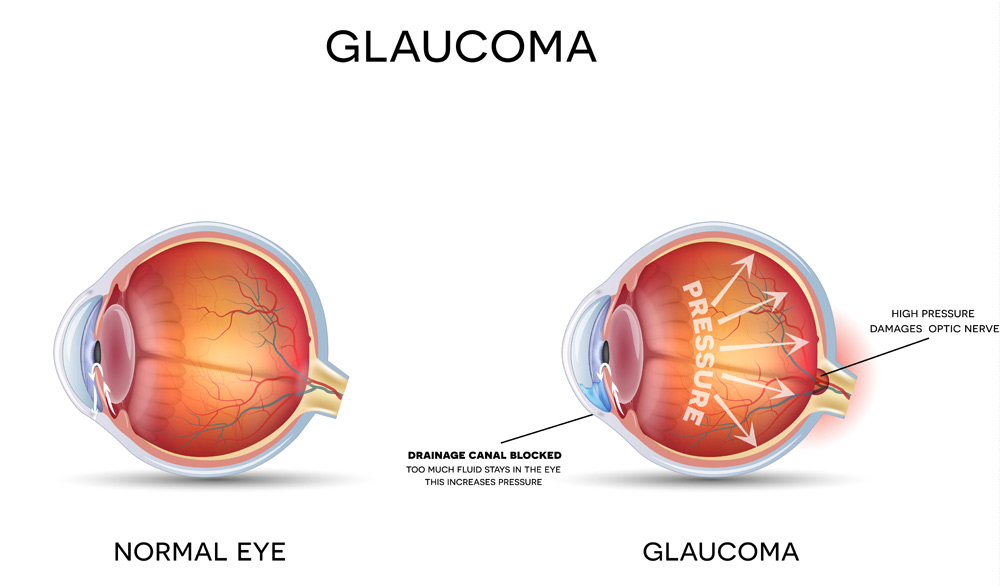
In most cases, fluid builds up in the front part of your eye. This extra fluid puts pressure on your eye, gradually damaging your optic nerve. The name of this pressure is intraocular pressure (10P), or eye pressure. Some people have normal eye pressure and still get glaucoma. Untreated glaucoma or poorly managed glaucoma can lead to permanent and irreversible vision loss and blindness.
Most people develop glaucoma in both eyes, although the disease initially may be worse in one eye. With open-angle glaucoma, one eye may have moderate severe damage, while the other eye may be mildly affected. People with closed-angle glaucoma in one eye have a 40% to 80% chance of developing the same type of glaucoma in the other eye within five to 10 years.
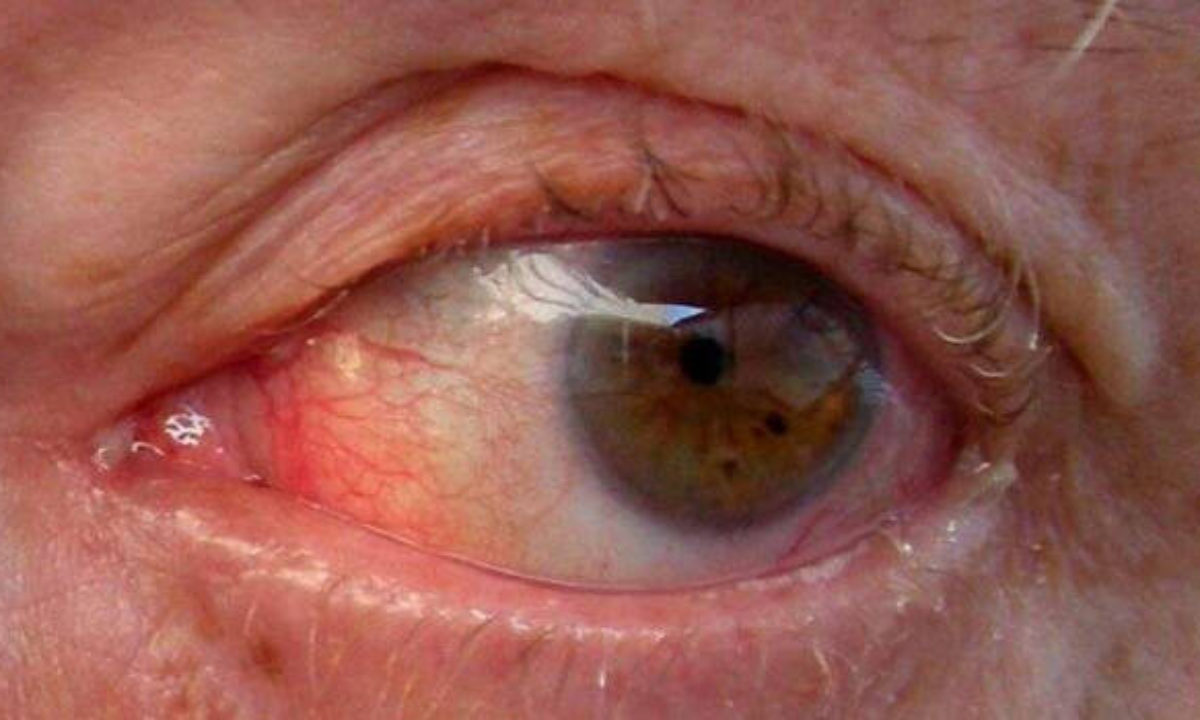
How common is glaucoma?
Glaucoma is a common age-related eye issue that affects an estimated 3 million Americans. Globally, it’s the second leading cause of blindness after cataracts.
Types of glaucoma
There are several types of glaucoma, including:
- Open-angle glaucoma; drainage canals appear to be open and functioning normally. Over months or years, the fluid in your eye can build up and put pressure on optic nerve. The disease may go unnoticed for years because most people don’t have symptoms.
- Closed-angle glaucoma; Also called angle-closure or narrow-angle glaucoma, this rare type often comes on suddenly (acute). It occurs when the angle between your iris and cornea is too narrow. It may happen when your pupil changes and becomes too big (dilated) too quickly. This blocks your drainage canals and prevents aqueous fluid from leaving your eye, causing eye pressure to rise. Symptoms, including eye pain and headaches, can be severe and require immediate medical attention.
- Normal-tension glaucoma; As many as 1 in 3 people have optic nerve damage even when eye pressure is normal or not very high. Experts are uncertain about what causes normal-tension glaucoma. Another name for this type is normal pressure or low-tension glaucoma. This type is more common among people of Asian descent or Asian Americans.
- Congenital glaucoma; Some babies are born with drainage canals that don’t form properly in the womb. Healthcare provider might notice the baby’s glaucoma symptoms at birth become noticeable during childhood.
Symptoms and causes
The problem is that for some types of glaucoma, there aren’t any early warning symptoms, and changes to vision can happen gradually, so the symptoms are easy to miss. Because many people with open-angle glaucoma don’t have any noticeable symptoms, it’s very important to have routine eye exams to detect. Closed-angle glaucoma has more severe symptoms that tend to come on suddenly.
With any type, one can experience:
- Eye pain or pressure.
- Headaches.
- Rainbow-colored halos around lights.
- Low vision, blurred vision, narrowed vision (tunnel vision) or blind spots.
- Nausea and vomiting.
- Red eyes.
What causes glaucoma
Glaucoma can occur without any cause, but many factors can affect it. The most important of these factors is intraocular eye pressure. Your eyes produce a fluid called aqueous humor that nourishes them. This liquid flows through your pupil to the front of your eye. In a healthy eye, the fluid leaves through the drainage canals located between your iris and cornea. With glaucoma, the resistance increases in your drainage canals. The fluid has nowhere to go, so it builds up in your eye. This excess fluid puts pressure on your eye. Eventually, this elevated eye pressure can damage your optic nerve and lead to glaucoma.
Risk factor for glaucoma
Glaucoma can affect anyone, but the risk increases with age. People who are Black and Hispanic are much more likely to get glaucoma than other ethnic groups, and they tend to develop the disease earlier in life. Asian and Inuit populations are also more susceptible to a specific form of glaucoma known as angle-closure glaucoma or closed-angle glaucoma. People with diabetes are twice as likely to get glaucoma. Other risk factors include:
- Family history of glaucoma.
- Farsightedness or hyperopia (for closed-angle glaucoma).
- High blood pressure (hypertension and very low blood pressure
- (hypotension)
- Long-term use of corticosteroids.
Diagnosis and Tests
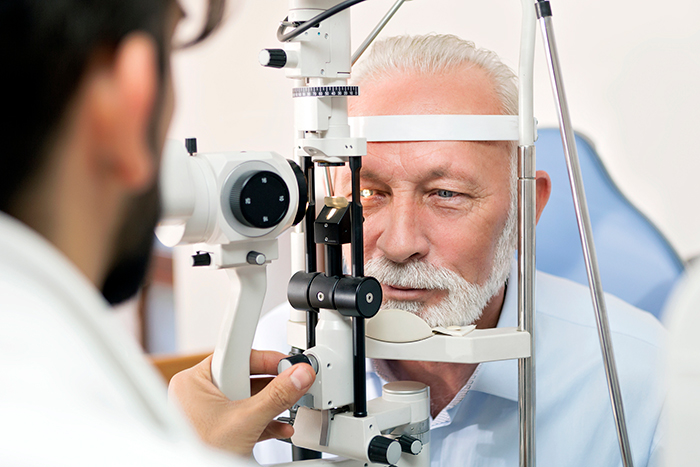
How is glaucoma diagnosed?
It’s possible to have glaucoma and not know it. Regular eye exams are important to catch glaucoma or other eye problems. Eye exams can assess optic health and vision loss. To check for glaucoma, an eye doctor may do one or more of these painless
Tests:
- Dilated eye exam to widen pupils and view your optic nerve at the back of your eyes.
- Gonioscopy to examine the angle where your iris and cornea meet.
- Optical coherence tomography (0CT) to look for changes in your optic nerve that may indicate glaucoma.
- Ocular pressure test (tonometry) to measure eye pressure.
- Pachymetry to measure corneal thickness.
- Slit-lamp exam to examine the inside of your eye with a special microscope called a slit lamp.
- Visual acuity test (eye charts) to check for vision loss.
- Visual field test (perimetry) to check for changes in peripheral vision (your ability to see things off to the side).
Management and Treatment
How is glaucoma managed or treated?
Untreated glaucoma can lead to the faster development of permanent vision loss or blindness. Treatments can slow down additional vision loss, but they can’t restore lost vision. It’s important to see an eye doctor right away if one have eye pain, severe headaches or vision problems.
Medications to treat glaucoma
Many types of prescription eye drops can treat glaucoma. Some decrease fluids and increase drainage to improve eye pressure. Because glaucoma is a lifelong condition, you may need to use daily eye drops for life. Your eye care provider places the bimatoprost implant (Durysta©) into your eye. Currently, you can only have it placed once in each eye.
Laser therapy to treat glaucoma
Your eye doctor uses a laser (a strong beam of light) to help improve fluid drainage from your eye. Your provider may suggest lasers as a first-line therapy instead of drops or in addition to eye drops. Having laser treatments vary but can last for years in some cases. Your provider may be able to repeat some types of laser treatments.
Surgery to treat glaucoma
Surgery is another way to help reduce eye pressure. It’s more invasive but can also achieve better eye pressure control faster than drops or lasers. Surgery can help slow down vision loss, but it can’t restore lost vision or cure glaucoma. There are many types of surgeries for glaucoma, and depending on the specific type and severity, your eye doctor may choose one over another.
For instance, there’s traditional surgery that involves cutting your eye and minimally invasive glaucoma surgery (called MIGS). There are many types of MIGS procedures available, including different types of stents or devices used to improve the outflow of fluid from your eye. The MIGS procedures typically take less time to perform and have a faster recovery time with potentially fewer risks than traditional glaucoma surgeries.
Complications of glaucoma
An estimated 1 in 10 people with glaucoma develop some degree of visual impairment. Blindness is less common and affects 5% of people with glaucoma.
Can glaucoma be cured?
No, there’s no cure for glaucoma. However, you can manage symptoms and stop the disease from getting worse.
What is the most effective treatment for glaucoma?
There isn’t one best treatment for glaucoma. Your provider may suggest one treatment for you and a different one for someone else who has glaucoma.
How to prevent glaucoma?
Early detection of glaucoma through routine eye exams is the best way to protect eye health and prevent vision loss. Glaucoma testing should occur every:
One to three years after age 35 for people at high risk.
Two to four years before age 40.
One to three years between ages 40 and 54.
One to two years between ages 55 to 64.
Six months to 12 months after age 65.
What can I expect if I have glaucoma?
Blindness is a rare complication for people with glaucoma, as long as a provider detects it early. However, glaucoma is a chronic and progressive condition that often causes some degree of vision loss over time. The earlier to catch glaucoma and start treatments, the better the odds of saving the vision. Treatments can slow down disease progression and vision loss.
Health centers should be visit if one experiencing:
- Blurred or low vision.
- Halos, eye floaters or flashers.
- Sudden, severe eye pain or headaches.
- Sensitivity to light.
- Vision loss
 Safe Future Ministry for the Blind and Visually Impaired