

Parenting infant could be very challenging and tedious, but it becomes more tedious when the infant is experiencing virtual impairment aside from physical trumal many eye diseases or conditions are caused by infections which start from infancy . Understanding parenting may start from nuturing the baby including their eye’s health.
Unfortunately there’s no school or educational process to teach parents on how to raise infant, this article may not be an overall skills set on parenting but may be a guild on basic skills that may be appropriated for raising a child especially those with eyes challenges.
Protect the eyes of all new born babies by keeping them clean and moist to reduce the incident of infection and use appropriate antibiotics ointment to prevent infections.
Get the children the required vaccination dozes
Introduce them to breastfeeding and continue to breastfeed as long as possible
Mother and children should have good nutrition especially those that contain vitamin A . Since children may have diarrhea when they stop breastfeeding and may cause dry eyes ,they should drink lots of fruits
and food rich in vitamin A such as matched Papaya, matched cassava, spinach etc.
Toddler and kindergarten
For the purpose of this article and the mission of SafeFuture Ministry toddler and kindergarten that is children between the ages of One to five are going to be regarded as Young children. At this stage of their lives children need a lot of attention, monitoring and guidance because:
- They do a lot of jumping and running around
- They learn about their environment
- They learn how to decipher and understand their world.
- They learn social skills such as toileting, eating habits etc
- They do a lot of questioning and show inquisition.
- They learn using their sense organs such as eyes for seeing ,nose for smelling, tongue for tasting, ear for hearing and their body for touching. An impairment to any of these organs especially the eyes can make the parenting of this age group be more challenging.
A child’s virtual system is one of the last sensory system to develop fully but plays a role in ensuring the proper development of many other sensory system .
As an adult we have already master a lot of skills but what about young children with virtual impairment that are just learning these skills for the first time ?
When our virtual system is impaired, gross motor, fine motor , balance, and self-care skills often take
longer to master and other sensory system need to be relied on.
Therefore we should give more assistance and attention to these children at this important stage of their lives. The Sense of touch is particularly important to a blind or virtual impaired child. This tends to
replace their sense of sight with their sense of touch (Tactile movement is very important to them).
Baby Nutrition
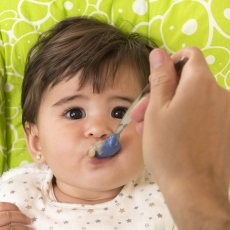
Food provides the energy and nutrients that babies need to be healthy. For a baby, breast milk is best. It has all the necessary vitamins and minerals. Infant formulas are available for babies whose mothers are not able to breastfeed or decide not to do so.
Infants are usually ready to eat solid foods at about 6 months of age. Check with your health care provider for the best time for your baby to start.
If you introduce one new food at a time, you will be able to identify any foods that cause allergies in your baby. Allergic reactions include a rash, diarrhea, or vomiting.
Many parents are concerned about peanut allergies.
- Most babies can have peanut products when they are about 6 months of age
- Babies who have mild to moderate eczema have a higher risk of food allergies. They usually can eat peanut products at about 6 months of age. If you have concerns about this, check with your baby’s health care provider.
- Babies who have severe eczema or egg allergies are at high risk for peanut allergies. Your baby may need allergy testing. Your baby’s provider can also recommend when and how to give your baby peanut products.
There are some foods that you should avoid feeding your baby:
- Do not give your baby honey before 1 year of age. Honey may contain bacteria that can cause botulism in babies.
- Avoid cow’s milk before age 1, since it does not have all of the nutrients that babies need and babies cannot digest it
- Unpasteurized drinks or foods (such as juices, milks, yogurt, or cheeses) may put your child at risk for an E. coli infection. E. coli is a harmful bacteria that can cause severe diarrhea.
- Certain foods that can cause choking, such as hard candy, popcorn, whole nuts, and grapes (unless they are cut into small pieces). Don’t give your child these foods before age 3.
- Because it contains a lot of sugar, babies should not drink juice before the age of one.
 Safe Future Ministry for the Blind and Visually Impaired