

What is amblyopia?
Amblyopia also known as lazy eye, occurs when one eye becomes weaker than the other during infancy or childhood. The brain favors the better eye, allowing the weaker eye to get worse over time. Early screening is important because treatment is more effective when started early. Treatments include an eye patch or glasses.
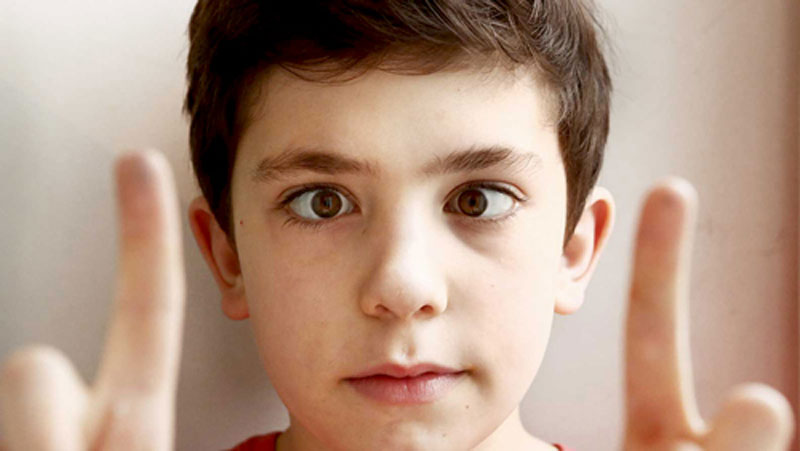
How does amblyopia affect my child?
In a child with amblyopia, one eye has blurred vision, and the other has vision. The brain begins to ignore the blurry eye and uses only the eye with clear vision. Eventually, the brain learns to rely on the stronger eye, allowing the weaker eye to worsen.
Who is at risk for amblyopia?
Some children may have risk factors for amblyopia, including:
Family history of eye problems.
How common is amblyopia?
Amblyopia is the most common reason for vision loss in kids, affecting 2% to 4% of children through the age of 15 years. It can occur even if a child has no noticeable problems. But it can cause permanent problems if not detected and treated during childhood. Early, regular eye exams are important.
SYMPTOMS AND CAUSES
What causes amblyopia?
Amblyopia occurs when there is a major difference between the two eyes in their ability to focus. The most common cause of amblyopia is other vision
What eye conditions may lead to amblyopia?
Conditions that may lead to amblyopia include:
Refractive errors: These conditions affect how light passes through the eye.
They include:
- Nearsightedness (myopia), trouble seeing far away.
- Farsightedness (hyperopia), trouble seeing up close.
- Astigmatism, a curved cornea.
- Strabismus (crossed eyes): The eyes are meant to move together as a pair, but sometimes they don’t. If one drifts (in, out, up or down), the brain may rely on one eye over the other, leading to amblyopia.
- Structural problems: Sometimes, the eye has a structural problem that can
What are some lazy eye symptoms?
Amblyopia is not always obvious. The condition often goes undetected until a child has an eye test. So every child should have early, regular vision screening.
One may notice symptoms. A child with amblyopia may:
- Bump into things on a particular side a lot.
- Experience a large difference in nearsightedness or farsightedness
- between the two eyes.
- Favor one side of the body.
- Have crossed eyes.
- Have a droopy eyelid.
- Shut one eye or squint a lot.
- Frequently tilt their head to one side.
Diagnosis and Tests
When should amblyopia be diagnosed?
- A child’s vision for amblyopia. The screener may:
- Put drops in the eye to make the pupil bigger.
- Shine a light in each eye.
- Cover one eye at a time and test whether each eye can follow a moving object.
- Ask older children to read letters on a chart on the other side of the room.
A vision exam determines:
- Do the eyes allow light all the way through?
- Do both eyes see equally well?
- Are the eyes moving correctly? Are they moving together?
- Are the eyes properly aligned?
- Does vision differ between the two eyes?
- Does one eye drift or wander?
- Are any cataracts visible with a lighted magnifying tool?
Management and Treatment
What are the treatments for amblyopia?
Amblyopia treatment is much more effective if it starts early, while the connections between the eyes and brain are still developing. Strategies focus eventually making that eye stronger.
Glasses: Eyeglasses are also a common lazy eye treatment. They can help amblyopia by improving nearsightedness, farsightedness and eye crossing.
Eye drops: For mild cases, your provider may recommend eye drops (atropine) to temporarily blur vision in the better eye. The goal is the same as a patch: to force the brain to use the weaker eye.
Surgery: An operation for amblyopia is rare. Your healthcare provider may suggest surgery to fix certain causes of amblyopia, such as cataracts.
Prevention
Can amblyopia be prevented?
It can’t be prevented amblyopia or the other vision problems that may cause it. But one can stop it from getting worse or causing permanent problems. The best way to prevent vision loss from amblyopia is to get regular eye exams. Make sure your child has a thorough eye exam by the age of 6 months and then again by 3 years. Amblyopia does not go away on its own. If left untreated, it can cause permanent vision loss and a “wonky eye” that always looks in another direction. And lazy eye is much harder to treat in teenagers and adults. Early vision exams and treatment are essential.
 Safe Future Ministry for the Blind and Visually Impaired